
"Tamil Nadu Congress Dilemma: Opportunism or Survival in Ever-Changing Alliances?"
Source: Theprint.inPosted by RAJNEET Editorial • about 2 hours ago
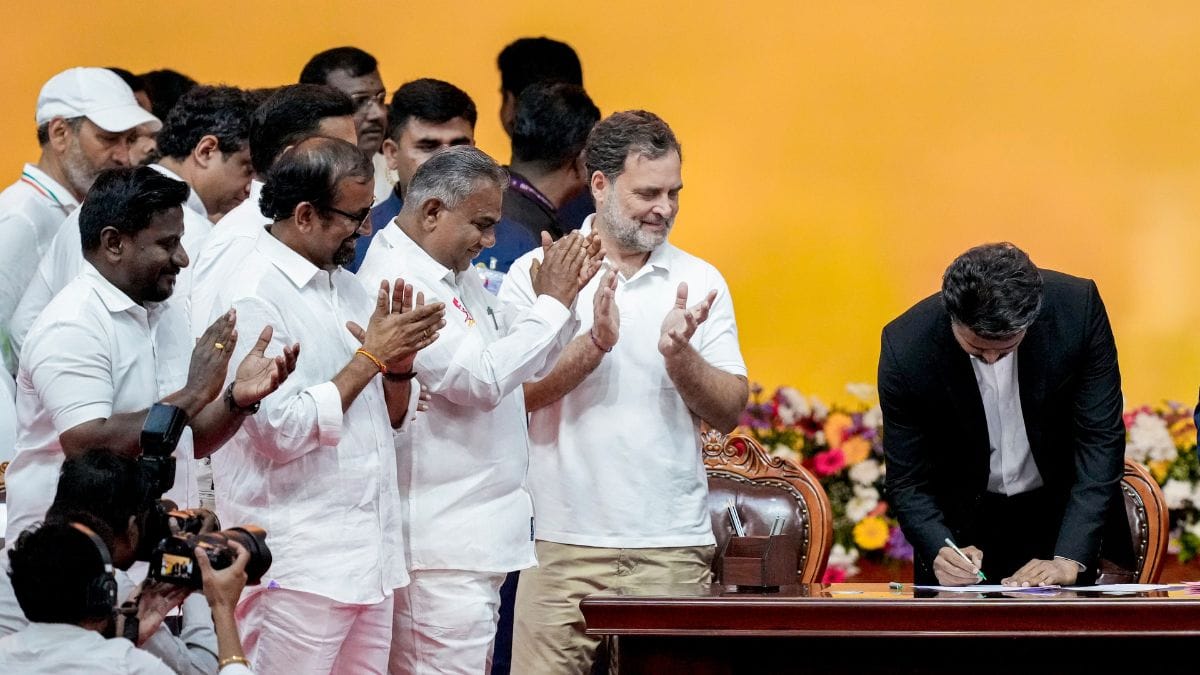
'Opportunism' or 'survival'? Congress & its revolving door of alliances in Tamil Nadu over decades
Tamil Nadu has witnessed a unique pattern of the Indian National Congress (Congress) forming alliances with various parties over the years, often switching sides to maximize its electoral gains. This trend began in 1967 when the Congress, which had dominated state politics, formed an alliance with the Dravida Munnetra Kazhagam (DMK) to counter the rapidly rising influence of the Communist Party of India (CPI). Since then, the Congress has oscillated between forming coalitions with the DMK, the All India Anna Dravida Munnetra Kazhagam (AIADMK), and other regional parties like the Tamil Maanila Congress (TMC) and the All India Forward Bloc (AIFB). As of late, the Congress has announced an alliance with the Viduthalai Chiruthaigal Katchi (VCK), a Dalit-centric party that has emerged as a significant force in Tamil Nadu politics.
The Congress's penchant for forming alliances stems from its desire to stay relevant in the extremely competitive Tamil Nadu politics. The party has traditionally banked on its national appeal and its ability to attract a broad coalition of castes and communities. However, the state's complex social dynamics and the rise of regional parties like the DMK and AIADMK have forced the Congress to adapt and form alliances to stay afloat. The party's decision to switch sides is often seen as a pragmatic move to optimize its electoral chances, rather than a long-term strategic plan. Analysts point out that the Congress's failure to build a strong grassroots presence and its over-reliance on national-level leaders have led to its inability to establish a lasting presence in Tamil Nadu.
The Congress's alliance-hopping has significant implications for the state's voters. As the party continues to shift its allegiances, citizens may find it difficult to discern its true identity and policies. This uncertainty can lead to voter disillusionment and a lack of trust in the party. Experts and opposition parties have criticized the Congress for its opportunistic behavior, arguing that it is more interested in short-term gains than long-term governance. They contend that the party's lack of a clear ideology and its willingness to abandon its core values for power have eroded its credibility in the eyes of the electorate.
As Tamil Nadu heads towards the next state assembly elections, the Congress's alliance with
Public Debate
Live Public Opinion
Select your stance to enter the debate:
Join the Conversation
Follow us on Instagram for daily updates
@rajneet.co.in