
Pakistan: Senior Lashkar-e-Taiba commander Mir Shukr Khan...
Source: Organiser.orgPosted by RAJNEET Editorial • about 2 hours ago
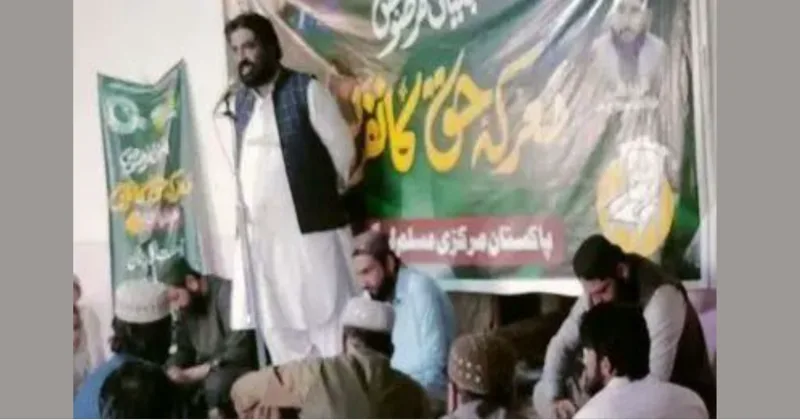
A couple of days ago, a senior commander of Lashkar‐e‐Taiba (LeT) Mir Shukr Khan Raisani was found dead in mysterious circumstances in Quetta, the capital of Pakistan’s Balochistan province. Raisani, long regarded as a key operative in Lashkar’s recruitment and radicalisation machinery, was apparently targeted and killed by unidentified assailants. Pakistani authorities have yet to issue an official statement clarifying the circumstances of his death. This has led to speculation regarding his death. It is not clear whether it resulted from internal rivalries, separatist violence, or a covert strike against the group’s leadership. Raisani played a significant role within Lashkar as he was drafted into the political domain. As a public figure, he was considered a principal architect of its cadre‐building operations in Balochistan, a province facing insurgency, instability and almost daily attacks on Pakistan security forces. His work focused on identifying vulnerable youth, indoctrinating and enrolling them into Lashkar’s sympathisers and later cadres. Read More: Red Fort Car Bomb Blast Case: NIA files 7,500-page chargesheet, Al-Qaeda-linked doctors named as accused This made him an important in shoring up Lashkar’s manpower base in a region where separatist sentiment and anti‐state violence have long challenged Islamabad’s authority. It may be mentioned here that Lashkar has long been considered an important asset by the Pakistan military as a proxy terror group in its covert fight against India. Due to Financial Action Task Force (FATF) pressure, the Pakistan establishment, put some Lashkar operatives in jails on minor charges. It also helped the Lashkar evolve and expand its influence beyond terrorist operations. In this, Raisani played an important role as he was shifted into politics trying to project it as a group with ambitions in the electoral arena. The slain Lashkar terrorist had served as deputy general secretary for the Quetta region. It was in Quetta that the Inter-Services Intelligence (ISI) had hatched and protected Haqqani group of Afghan Taliban for over a decade. The Lashkar too focussed on nurturing its political wing in Quetta, an effort to gain legitimacy in the political domain. His transition from being a full time recruiter of terrorists to political organiser indicated that Lashkar combined armed jihad with political activism. Notably, Raisani had reportedly participated in a Lashkar‐organised programme in support of the Pakistan Army just a couple of days before his death. The programme was a part of Pakistan Army’s attempt to portray itself as a victor in last year’s military showdown with India during first and second week of May. Pompous speeches and exaggerated claims like having downed several Rafales of the Indian Air Force (IAF) and destroying S-400 missile battery were made at the function which he participated in. The Lashkar leader was projecting himself to be aligned with state institutions, a red flag for the armed Baloch groups. His sudden killing immediately after such a public appearance adds to the mystery, fuelling theories of betrayal or targeted elimination. The killing comes against the backdrop of continuing instability in Balochistan, where separatist violence, militant activity, and targeted assassinations have become frequent occurrences. The province has witnessed repeated attacks on security forces, infrastructure, and political figures, with multiple actors vying for influence. This week alone, at least a dozen Pakistani soldiers, including an officer of the rank of Major, have been killed in two separate attacks in the restive province. Raisani’s death and the absence of a claim may be indicative of possibility of intra‐organisational purges, clash of rival terrorist factions, or intelligence operations eliminating Lashkar’s leadership, culling them selectively. This incident also aligns with the broader trend of targeted assassinations of senior Lashkar‐e‐Taiba leaders across Pakistan in recent years. Figures such as Sheikh Yousuf Afridi, Amir Hamza, Bilal Arif Sarafi, and Ismail Ahmad have all met similar fates, often at the hands of unidentified gunmen operating with military precision. Actually, “unknown gunmen’’ has become an established phrase in the context of killings of several pro-Pakistan terrorists all over the country. This has eroded Lashkar significantly and downgraded its operational resilience as attrition mounts. For our western neighbour, Raisani’s death underscores the fragility of security forces and their failure to protect themselves and their assets in Balochistan. For India, the news of another terrorist commander going down can only be considered good. The Lashkar was responsible for the spectacular Mumbai attacks of November 2008. The continuing elimination of Lashkar’s senior figures suggests that the group is under sustained pressure. There is the unresolved question of whether this is happening because of internecine fights or external covert campaigns.
To understand the full context, it's important to look at what led to this situation. Previous developments and ongoing debates have set the stage for this current turn of events.
For ordinary citizens, this news could mean changes in daily life, policy, or local economy. Experts and analysts are weighing in with different perspectives on what this means for the future.
As with any major development, there are different viewpoints on this issue. Some see it as a positive step forward, while others raise concerns about the implications. What do you think about this situation? Share your thoughts and join the debate on RAJNEET.
Public Debate
Live Public Opinion
Select your stance to enter the debate:
Join the Conversation
Follow us on Instagram for daily updates
@rajneet.co.in